
Why You Crave Sugar When You’re Stressed

That sudden craving for sugar during stressful moments isn’t random. It’s your body trying to cope.
Stress increases cortisol, which can:
• Raise blood sugar fluctuations
• Increase appetite
• Trigger cravings for quick energy sources
Sugar provides a rapid spike in energy—but it’s short-lived. This leads to a crash, followed by more cravings, creating a cycle.
It’s not just about willpower. It’s about how your body is responding to stress.
Breaking this pattern involves:
• Stabilizing meals with protein and fiber
• Managing daily stress levels
• Avoiding long gaps between meals
Nutritional support can help maintain balanced energy and reduce stress-driven cravings over time.
Cravings are often signals—not weaknesses. Understanding them is the first step to managing them.
Better wellness decisions begin with better understanding.
Educational content only. This article does not diagnose, treat, cure or prevent any medical condition.
More in Scientific Wellness
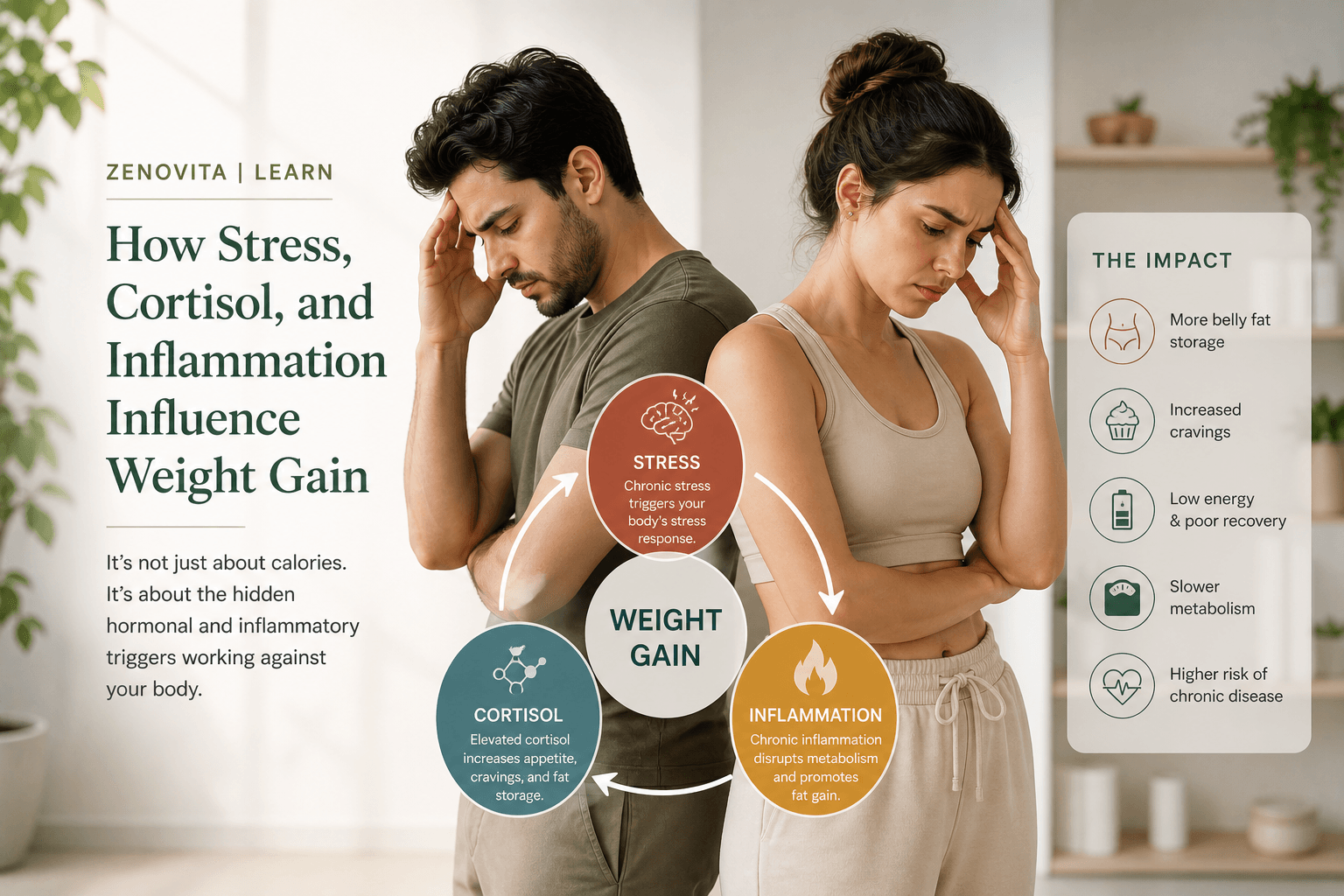
How Stress, Cortisol, and Inflammation Influence Weight Gain
Weight gain isn’t always just about calories. In many cases, it’s influenced by chronic stress, elevated cortisol levels, and low-grade inflammation.
4 min read
Why You Feel “Wired But Tired” at Night
You’re exhausted by the end of the day, yet the moment you try to sleep, your mind stays active. This is a common sign of high cortisol patterns.
4 min read
Why Your Energy Drops Every Afternoon
The “afternoon energy crash” is often linked to blood sugar fluctuations, stress response, and inefficient energy production at the cellular level.
3 min read